


It’s 10:00 PM on a stormy Sunday night. You hear a loud pop, the lights flicker and die, and suddenly, there’s an acrid smell of burning plastic drifting from your hallway.
Panic sets in. Is it just a fuse? Or is your house wiring melting behind the walls?
Electrical emergencies are terrifying because you often can’t see the danger until it’s too late. The anxiety of not knowing whether your family is safe, combined with the frustration of finding a reliable tradesperson after hours, is overwhelming.
Don’t panic. You are in the right place.
This guide isn’t just about fixing the lights; it’s about keeping your home safe. We will walk you through exactly how to handle an electrical crisis on the Central Coast, how to distinguish a nuisance trip from a dangerous hazard, and what to do while help is on the way.
Quick Answer: What to Do in an Electrical Emergency
If you suspect an electrical emergency, follow these steps immediately:
1. Do Not Touch: Never touch a sparking outlet, fallen line, or appliance that is smoking.
2. Isolate Power: If it is safe to approach, turn off the Main Switch at your switchboard (usually the red switch).
3. Evacuate: If you smell burning plastic or see smoke, clear the area and call 000 for fire services.
Call a Pro: Contact a licensed 24-hour Emergency Electrician immediately. Do not attempt DIY repairs.
Is This Actually an Emergency? (The Checklist)
Not every power outage requires an emergency call-out fee. Sometimes, the grid is down; other times, it’s a simple appliance fault.
Think of your home’s electrical system like the plumbing. A dripping tap is annoying (routine maintenance), but a burst pipe flooding the kitchen is a crisis (emergency).
Here is a quick reference table to help you decide if you need to call right now:
| Scenario | Urgency Level | Recommended Action |
| Total Power Loss (Neighbours have power) | HIGH | Call an Emergency Electrician immediately. |
| Total Power Loss (Street is dark) | LOW | Call Ausgrid (13 13 88). This is a grid issue. |
| Sparking / Arcing from the outlet | HIGH | Isolate power. Call an electrician immediately. |
| Burning Smell near switchboard | HIGH | DANGER. Isolate power. Call immediately. |
| Hot Water System failure | MEDIUM | Can usually wait until morning (unless leaking onto wires). |
| Single Light Bulb blown | LOW | Routine maintenance. Book during business hours. |
Pro Tip: If your safety switch trips repeatedly, do not keep forcing it back on. The switch is acting like a bodyguard, stopping the electricity flow because it detects a fault. Forcing it on is like telling the bodyguard to step aside while a threat walks in.
The “Red Zone”: Immediate Danger Signs
If you experience any of the following, you are in the “Red Zone.” These are not DIY fixes.
The “Fishy” Smell
Electrical components are made of heat-resistant chemicals and plastics. When they overheat or melt, they often release a smell similar to fish or urine. If you smell this near a switch or power point, internal arcing is occurring. This is a major fire risk.
Tingle on Taps
If you touch a metal tap or shower handle and feel a slight “buzz” or tingle, this is critical. It often indicates a degraded earth wire or a fault in the neutral connection. This means your plumbing pipes are becoming live conductors of electricity.
If you are renovating, remember that faulty bathroom waterproofing costs far more than just water damage—it can lead to dangerous moisture ingress into your electrical circuits, causing live tiles or taps.
Storm Damage & Fallen Lines
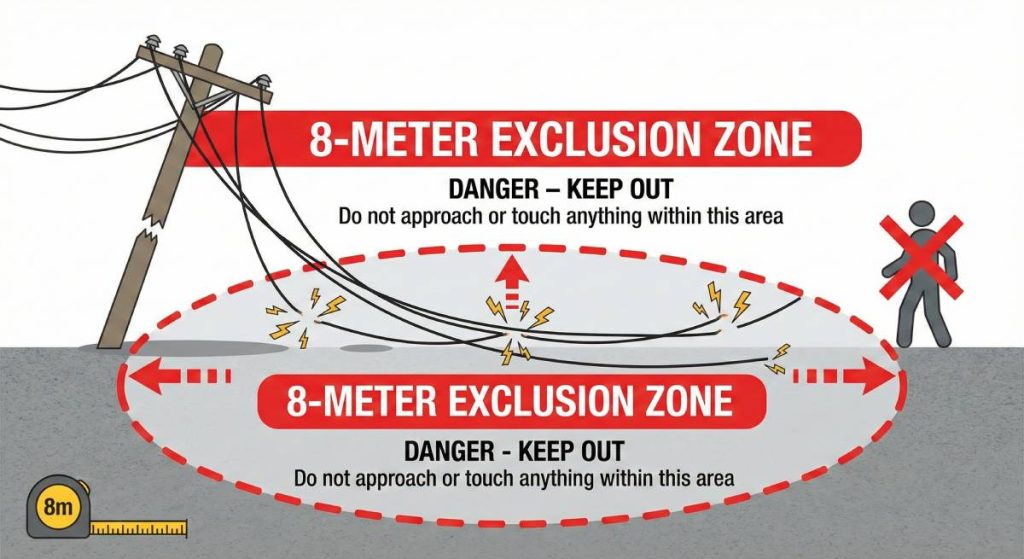
The Central Coast is prone to heavy storms. If a tree branch brings down the consumer mains (the wire connecting the street pole to your house), stay at least 8 meters away.
What to Do While You Wait for Help
Once you have called your emergency electrician, you likely have 30 to 60 minutes before they arrive. Use this time to secure the home.
- Unplug Sensitive Electronics: Surges can happen when power is restored. Unplug TVs, computers, and modems.
- Clear the Path: Ensure the electrician has a clear path to the main switchboard. If it’s dark, have a torch ready for them.
- Keep the Fridge Closed: A closed fridge will keep food cold for up to 4 hours. Do not open it to check on the milk.
Understanding “Level 2” Electrical Work
This is a critical distinction that many homeowners miss.
Not all electricians are qualified to fix every emergency.
If the damage is located at the Point of Attachment (where the power enters your property) or involves the cables coming from the street, a standard electrician cannot touch it. You need a Level 2 Authorised Service Provider (ASP).
- Standard Electrician: Works inside the house (Power points, lights, internal switchboard).
- Level 2 ASP: Works on the network connection (Overhead cables, underground mains, metering, defect notices).
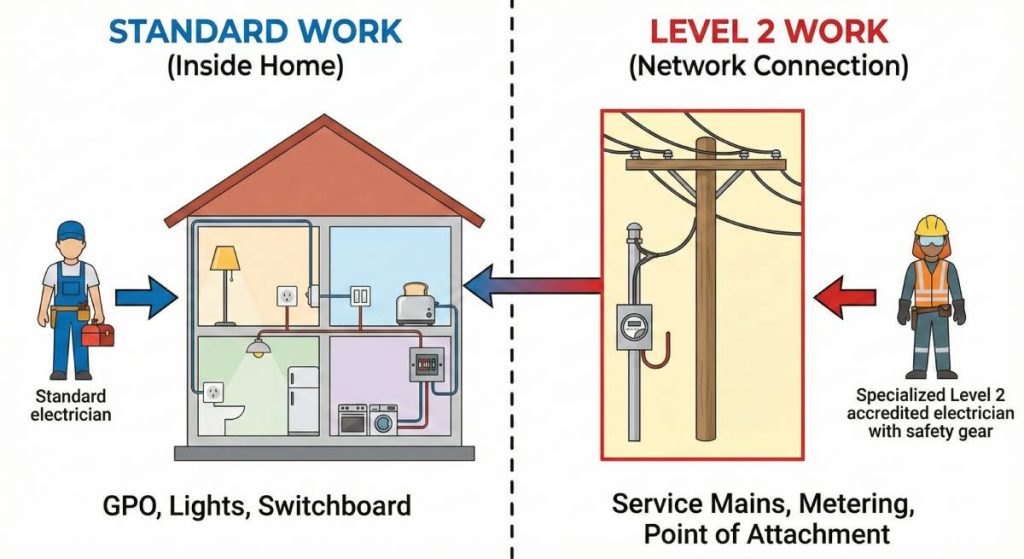
Expert Insight: If you have received a Defect Notice from Ausgrid, standard electricians cannot clear it. You must hire a Level 2 ASP to rectify the defect and submit the paperwork. If you don’t, Ausgrid may disconnect your power for safety reasons.
Common Central Coast Electrical Issues
Living on the coast brings unique challenges to your electrical infrastructure.
- Salt Corrosion: Salt mist from the ocean accelerates the rusting of outdoor switchboards and conduit. We often see connections that have simply corroded away, leading to arcing.
- Old Wiring (The “Cloth” Era): Many older homes in Gosford and Woy Woy still contain split conduit or cloth-insulated wiring. This insulation crumbles over time, leaving bare copper wires exposed.
- Possums and Rodents: Roof cavities are warm. Local wildlife often chew through insulation, causing short circuits that are difficult to locate without thermal imaging equipment.
- Water Leaks from Upper Levels: In two-story homes, a ceiling light filling with water is a major emergency. This is often caused by failed waterproofing in the bathroom above. If moisture seeps through yourbathroom floors, it can pool in the ceiling cavity and short-circuit your lighting wiring.
How to Choose the Right Emergency Electrician
When you are stressed, it is easy to pick the first number on Google. However, ensuring the contractor is legitimate is vital for your insurance and safety.
Look for these 3 Non-Negotiables:
- NSW Fair Trading Licence: Ask for their licence number immediately. You can check it online for free.
- Upfront Pricing: A reputable emergency sparky will have a clear “Call Out Fee” and then quote the repair before starting work. Avoid those who charge by the hour without an estimate. Bill shock is real.
- Local Presence: Are they actually based on the Central Coast, or is it a Sydney call centre dispatching someone from 2 hours away? Local trades arrive faster and know the local grid quirks.
Conclusion
Electrical emergencies are stressful, but they are manageable when you know the steps. Remember: safety comes first. Electricity is silent and invisible, and it does not forgive mistakes.
If you are seeing sparks, smelling smoke, or have lost power unexpectedly, do not hesitate. The cost of an emergency call-out is a small price to pay for the safety of your home and family.
Do you have a current electrical emergency?
Don’t risk it. Contact Reds Power Solutions in Central Coast now for immediate advice and rapid response.